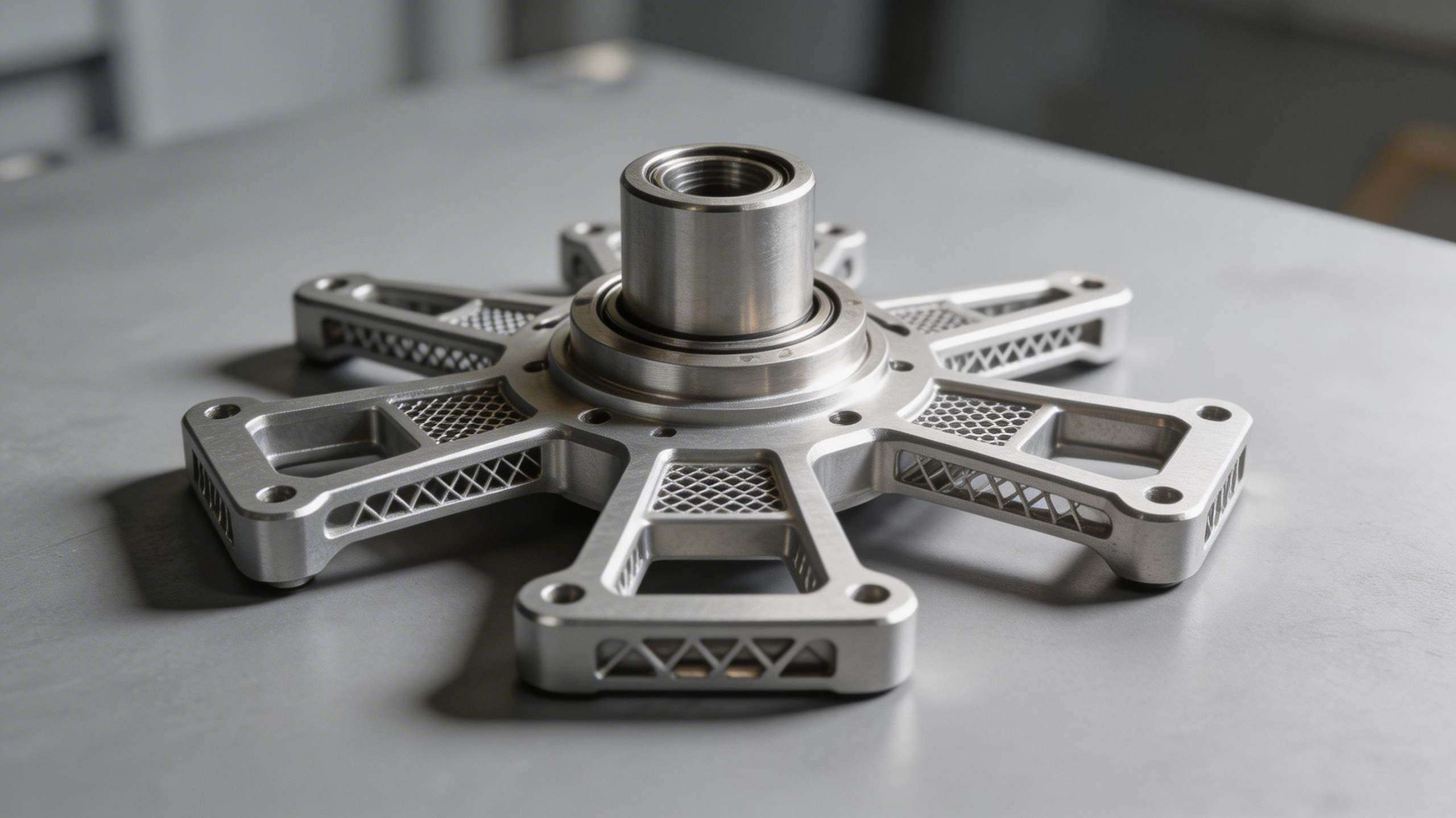
For aerodynamically complex UAS prototypes featuring lattice structures and deep undercuts, Additive Manufacturing (AM) offers superior geometric freedom. However, CNC machining remains the gold standard for high-strength structural mating components. To optimize flight performance and time-to-market, R&D engineers often require a professional rapid prototyping service that integrates both methodologies. By leveraging the specific strengths of these technologies, manufacturers can transition seamlessly from digital design to tangible, flight-ready hardware.
Optimizing UAS Geometries via Additive and Subtractive Synergy
Unmanned Aerial Systems (UAS) demand a rigorous balance between payload capacity and structural rigidity. Integrating diverse manufacturing technologies allows engineers to manipulate material properties and aerodynamic profiles with greater precision than using a single method alone.
Integrating Stiffness-to-Weight Ratio with Lattice Structures
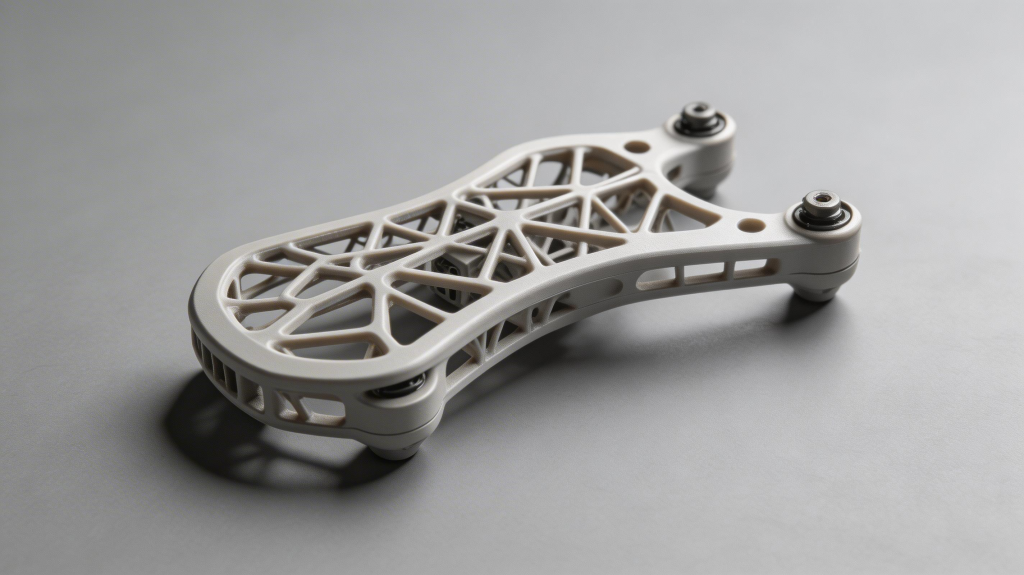
Modern fuselage design increasingly relies on topology optimization to reduce mass without compromising integrity. 3D printing rapid prototyping services enable the fabrication of internal lattice structures—complex geometries that are impossible to machine using subtractive methods. In historical comparison, a standard solid aluminum bracket machined via CNC might weigh 150g, whereas a topology-optimized Inconel printed part can achieve the same load-bearing capacity at 85g, representing a mass reduction of over 40%. This reduction directly correlates to extended flight times. Furthermore, AM allows for the creation of internal cooling channels that curve around avionics, managing thermal loads in ways that straight-line drilling cannot achieve.
Utilizing SLA Rapid Prototyping Services for Laminar Flow
While internal strength is vital, external aerodynamics dictate efficiency. SLA rapid prototyping services (Stereolithography) are essential for creating large, monolithic fuselage sections that require Class-A surfaces. Unlike Fused Deposition Modeling (FDM), which leaves layer lines that disrupt airflow, SLA utilizes UV lasers to cure resin with high precision, achieving surface finishes capable of simulating production injection molding. Engineering data indicates that SLA parts can hold tolerances within ±0.05 mm, ensuring that drag coefficients calculated in CFD simulations are maintained in the physical wind tunnel model. This precision is critical for validating laminar flow over wing surfaces before committing to expensive steel tooling.
Accelerating Development Cycles and Reducing Tooling Liabilities
Speed is the primary currency in aerospace innovation. Utilizing professional prototyping strategies allows firms to bypass traditional tooling bottlenecks, facilitating rapid iteration and market entry.
Overcoming Tooling Constraints with Direct Digital Manufacturing
Traditional CNC machining often requires custom jigs and fixtures to hold non-planar parts, adding weeks to the lead time. In contrast, rapid prototyping in China leverages Direct Digital Manufacturing (DDM) to produce complex geometries without auxiliary tooling. For example, a complex rotor hub design can be printed overnight for fit checks, whereas machining the same part might require a 5-axis setup and custom soft jaws. This agility allows engineering teams to test three or four design variations in the time it takes to set up a single CNC run. By eliminating the friction of tooling preparation, R&D departments can accelerate wind tunnel testing cycles, iterating aerodynamic profiles daily based on real-time data.
Implementing Bridge Manufacturing Strategies
For low-volume market entry, investing in hard steel molds immediately is a financial risk. Bridge manufacturing serves as a strategic gap-filler. By utilizing silicone molding (Vacuum Casting) or high-speed CNC machining for pilot runs of 50 to 200 units, companies can validate designs in the field. Historical case studies in the drone industry show that firms utilizing bridge manufacturing can enter the market 4 to 6 months earlier than competitors waiting for production tooling. This approach allows for the use of high-performance engineering plastics like PEEK or Ultem, ensuring the prototypes meet functional testing standards for heat resistance and mechanical stress.
Comprehensive Prototyping Capabilities at Livepoint Tooling
Livepoint Tooling provides a robust suite of prototyping solutions tailored to meet the rigorous demands of aerospace and industrial product development. Their services are designed to verify complex designs efficiently before mass production commitments.
Diverse Technology Integration
The company specializes in multiple fabrication methods, including CNC Machining for high-precision metal and plastic parts, and SLA/SLS for complex geometries. Their capabilities extend to Vacuum Casting (Urethane Casting) for low-volume production, offering a cost-effective alternative to hard tooling for market testing. This multi-process approach ensures that every component, from structural frames to aerodynamic shells, is produced using the optimal method.
Material and Finishing Versatility
Livepoint Tooling supports a wide array of engineering-grade materials. Options include metals like Aluminum, Stainless Steel, and Brass, as well as rigid plastics such as ABS, PC, PMMA, POM, and PEEK. To ensure prototypes simulate the final product’s look and feel, they offer extensive finishing services, including sanding, polishing, painting, silk screening, and anodizing.
Commitment to Precision and Speed
With a focus on rapid turnaround, Livepoint Tooling enables clients to receive functional prototypes in as little as a few days. Their rigorous quality control ensures tight tolerances, making them an ideal partner for verifying design function and appearance.
To determine the most effective manufacturing strategy for your specific UAS designs, contact the engineering team at Livepoint Tooling for a detailed project review.