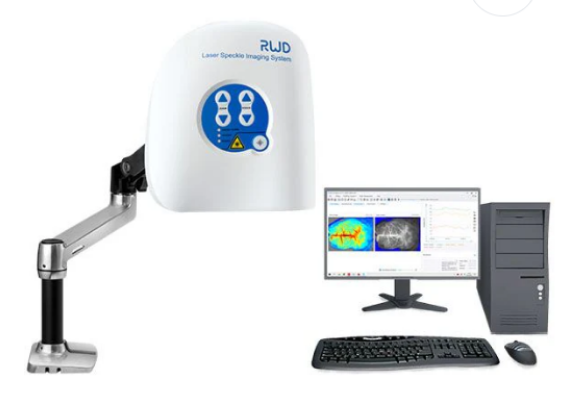
The advancement of optical imaging techniques has significantly enhanced our understanding of biological processes, particularly in the study of microcirculation. Among these techniques, laser speckle contrast imaging LSCI has emerged as a powerful tool for visualizing blood perfusion in real time. Researchers are often curious about how the penetration depth of LSCI compares to other optical methods used in similar applications.
Understanding LSCI and Its Advantages
Laser speckle contrast imaging (LSCI) is renowned for its non-contact approach, negating the need for contrast agents and allowing for high frame-rate capture with superior spatial resolution. This capability makes LSCI particularly suitable for observing blood flow in exposed tissues or organs during microcirculation studies, such as ischemic stroke or lower limb analysis. The quantitative data produced by the LSCI system includes detailed images and videos alongside crucial metrics like perfusion units and vessel diameters.
Compared to alternative optical techniques, BPLabLine LSCI’s penetration depth excels due to its ability to extract meaningful data from layers beneath the surface while maintaining high temporal resolution. Other methods, such as fluorescence imaging, often require specific contrast agents, limiting their applications and potentially affecting tissue health.
Comparing Penetration Depths
While traditional optical imaging techniques may struggle to penetrate deeper tissues effectively, LSCI’s unique methodology allows it to maintain clarity and precision even at increased depths. This advantage is particularly relevant in clinical and pre-clinical settings, where understanding microcirculation directly influences treatment outcomes. The integration of LSCI systems into research initiatives has been substantial, with institutions like Stanford University and Yale University utilizing this technology for groundbreaking studies.
The Impact of LSCI and Future Innovations
The continued adoption of laser speckle contrast imaging LSCI system acrosses over 200 academic and research institutions worldwide underscores its significance in modern scientific inquiry. BPLabline stands out as a provider of advanced LSCI systems, contributing to over 200 published research papers in prestigious journals. The ability to capture high-quality data while offering deep tissue insights is redefining methodologies in biological and medical research.
To sum up, LSCI presents significant advantages over other optical techniques, particularly concerning penetration depth and data quality. As the demand for precise imaging tools grows, LSCI will undoubtedly remain at the forefront of optical imaging innovations.