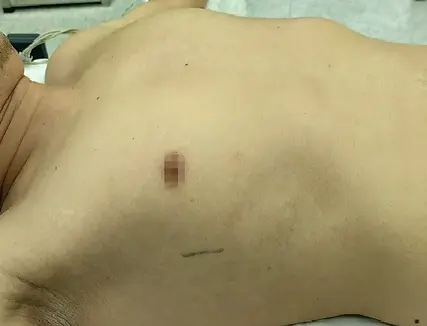
Chronic Obstructive Pulmonary Disease (COPD) often progresses slowly, but its physical signs become more noticeable in advanced stages. In stage 3 COPD, patients may develop a barrel chest, a visible change in the chest wall due to lung hyperinflation. At this stage, patients frequently experience persistent coughing, chest tightness, and shortness of breath—symptoms arising from the COPD and reflecting severe lung impairment and reduced elasticity.
Understanding the Barrel Chest Shape
The barrel chest shape is characterized by an enlarged anterior-posterior diameter of the thoracic cavity, giving the chest a barrel-like shape. In secondary cases such as long-standing COPD, the ribs may lose their natural slope, the intercostal spaces widen, and the infrasternal angle increase—structural changes resulting from chronic respiratory impairment. In primary barrel chest, the chest shape is not associated with an underlying disease, with the exact cause remaining unclear.
Causes and Diagnostic Approach
Barrel chest can be classified into primary and secondary types. The etiology of primary barrel chest is unknown. It often manifests from early childhood and typically has minimal physiological impact.
Secondary barrel chest, which is more common, develops as a result of underlying conditions—most notably COPD, where chronic air trapping and reduced elastic recoil gradually reshape the thoracic cage.
Diagnosis typically involves physical examination supported by imaging such as X-rays or chest CT scans to assess chest wall morphology and evaluate the degree of lung hyperinflation.
Treatment Innovation at The Institute of Chest Wall Surgery (ICWS)
They have developed advanced techniques to address complex chest wall deformities, including barrel chest shape correction. Among them, the Wenlin procedure represents a new generation of minimally invasive surgery. Designed for chest protrusion deformities, it ensures greater safety, smaller incisions, and faster recovery. By integrating such innovative surgical methods, The Institute of Chest Wall Surgery (ICWS) provides patients with safer, more precise, and scientifically grounded options for chest wall correction and respiratory improvement.