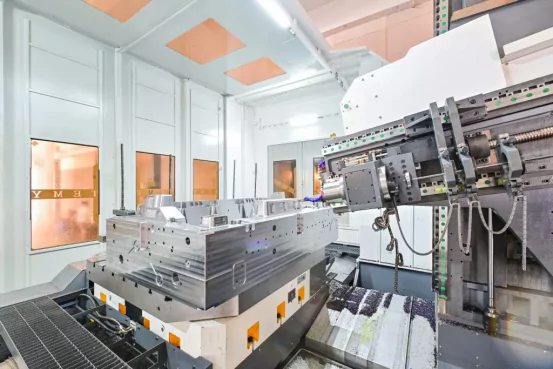
Scaling up a product design to satisfy massive market demands requires a shift in manufacturing strategy from flexibility to absolute stability. Minor variances in component geometry or slight shifts in cooling cycle times can accumulate into massive financial deficits during large-scale runs. Industrial operations rely on heavy-duty, hardened steel production molds to withstand the extreme pressures and temperatures of continuous automated molding cycles.
The Architecture of Hardened Steel Tooling
Industrial injection tools designed for mass replication utilize high-grade hardened steels like H13 or S136 to resist the abrasive nature of molten polymers. These robust metals undergo meticulous heat treatments to reach hardness levels capable of enduring millions of compression cycles without deformation. Every internal slider, core, and cavity face is machined with extreme precision to ensure hermetic seals under immense clamping forces.
Advanced internal engineering also incorporates dedicated, highly optimized cooling channels that wrap closely around the part geometry. These thermal pathways distribute coolant evenly, regulating the temperature gradient across the entire tool surface during operation. Uniform cooling prevents structural warping, minimizes internal stresses in the plastic, and dramatically compresses the overall solidification timeline.
Minimizing Operational Downtime Through Structural Durability
Continuous manufacturing environments operate on razor-thin schedules where any unscheduled stoppage impacts profitability severely. Soft or low-volume tooling alternatives quickly degrade under the friction of rapid polymer injection, resulting in flash or parting line defects. Heavy-duty tools mitigate this risk by maintaining their structural integrity over years of continuous mechanical stress.
Preventative maintenance schedules for these durable tools are predictable and infrequent, focusing on lubrication and surface cleaning rather than major geometry repairs. This structural reliability allows factory floors to maintain high utilization rates and meet tight commercial delivery deadlines. Minimizing tool wear prevents the gradual drift in part dimensions that often triggers quality control rejections.
Optimizing Automated Integration and Cyclic Efficiency
Massive production scales necessitate a high degree of integration with automated robotic arms, parts ejectors, and material feed systems. Premium tooling incorporates complex mechanical sensors, hydraulic lifters, and hot runner systems to facilitate completely autonomous operation. Hot runners maintain molten plastic inside the distribution channels, eliminating runner waste and streamlining part separation.
By automating the ejection process, the cycle time for each molding shot is cut down to the absolute minimum. Robots can extract finished parts instantly, apply any necessary inserts, and prepare the cavity for the next cycle without human intervention. This rhythmic efficiency maximizes hourly output while maintaining a completely safe and controlled manufacturing environment.
Mitigating Unit Costs Through Scale Optimization
While the initial capital requirement for hardened metal tooling is substantial, the long-term economic advantages are undeniable. Distributing the upfront fabrication cost across hundreds of thousands or millions of parts reduces the per-unit expense to fractions of a cent. This economic efficiency allows brands to price their commercial products competitively in crowded market sectors.
Eliminating Quality Drift in High–Cavitation Systems
Multi-cavity layouts present unique engineering challenges, as pressure and thermal distribution must be perfectly balanced across every single pocket. Premium industrial tooling utilizes advanced flow analysis software during the design phase to guarantee that plastic enters each cavity simultaneously. This balanced filling ensures that the first cavity and the sixty-fourth cavity produce identical physical components.
Eliminating quality drift across high-cavitation setups prevents the nightmare of sorting through massive batches of mixed-quality inventory. Quality assurance teams can trust that the structural strength, cosmetic shine, and weight of the components remain uniform. This rigorous consistency simplifies compliance tracking in industries like medical devices or electronics.
Resisting the Wear of Abrasive Engineering Resins
Modern engineering plastics frequently incorporate additives such as glass fibers, carbon fibers, or flame retardants to enhance mechanical performance. While these compounds improve the final part strength, they act as highly abrasive agents against the internal faces of a mold. Standard aluminum or mild steel tools degrade rapidly under the continuous blasting of these reinforced resins.
Hardened steel tooling utilizes specialized surface coatings, such as chrome plating or physical vapor deposition, to create an ultra-hard barrier. This protective layer prevents the abrasive fibers from scoring the polished cavities or dulling sharp shut-off edges. As a result, the tool preserves its crisp definition even when processing the most challenging industrial polymers.
Scalable Manufacturing Ecosystems Focused on Automation
As products transition into the commercialization phase, securing a manufacturing partner capable of executing high‑volume production with uncompromising precision becomes a critical success factor. APT‑Mold offers specialized production tooling services with a strong focus on automation and systems integration, designed to support high‑efficiency assembly operations. The production facility delivers durable, long‑life manufacturing molds that ensure consistent dimensional accuracy across extensive production runs.
APT-Mold’s engineering department leverages cutting-edge automation to ensure unparalleled consistency across all operations. This technology-driven approach not only accelerates production throughput but also significantly reduces turnaround times. Operating under an IATF 16949:2016-certified quality management system, the facility guarantees that every large-scale production run adheres to stringent regulatory and performance benchmarks.
Conclusion
High-volume manufacturing demands an unwavering commitment to structural stability, making durable tooling an absolute necessity for commercial success. By resisting wear, optimizing automated cycle efficiency, and eliminating dimensional drift, hardened steel tools safeguard both product quality and corporate profitability. Investing in robust tooling solutions ensures that mass-production lines remain stable, precise, and financially viable over millions of cycles.