Material selection in custom molding begins with service conditions, regulatory obligations, and component geometry. A compound that performs well in one seal may fail in another because temperature, media, compression, weather, or fatigue differs. Buyers planning custom rubber injection molding should define measurable requirements before discussing machine settings, tooling, or unit price.
The decision is normally a joint engineering task involving the end user, compounder, mold designer, and equipment supplier. Material properties must remain compatible with injection flow, curing behavior, insert adhesion, demolding, and post-processing. An industrial procurement specification should separate essential performance limits from preferences that unnecessarily restrict sourcing.
Translate Service Conditions into Material Requirements
Natural rubber can be suitable where resilience and dynamic performance matter, while EPDM is often considered for weathering, water, and sealing environments. NBR is commonly associated with oil resistance, and silicone materials serve applications requiring a broad temperature range or specialized electrical and cleanliness properties. Final selection still depends on the exact formulation and test method.
Chemical exposure needs precise definition. Terms such as oil, fuel, coolant, or cleaning agent cover many compositions and temperatures. A custom rubber molding project should identify concentration, contact duration, pressure, and combined aging effects. Compatibility testing under representative conditions is more reliable than choosing from a generic material family description.
Mechanical demands include hardness, tensile strength, elongation, tear resistance, compression set, abrasion, and fatigue. Designers should also consider tolerances and assembly loads. Very stiff or highly filled compounds may flow differently through narrow gates, affecting the process window of the selected molding equipment.
Regulated applications may require traceability, restricted-substance controls, biocompatibility, food-contact evidence, flame performance, or electrical tests. These needs should be defined before compound approval because documentation and change control can be as important as the physical properties of the first samples.
Cost comparisons should use finished-part performance rather than price per kilogram alone. A more expensive compound may reduce scrap, shorten cure time, or extend service intervals. Conversely, a premium formulation adds little value when the application does not use its additional temperature, chemical, or mechanical capability.
Match Compound Behavior to Molding and Tooling
Rubber compounds respond differently to shear, preheating, pressure, mold temperature, and cure time. A custom rubber injection molding process needs enough flow to fill the cavity before curing advances too far. Runner layout, venting, gate design, and injection profile should be developed with the actual production compound rather than a convenient substitute.
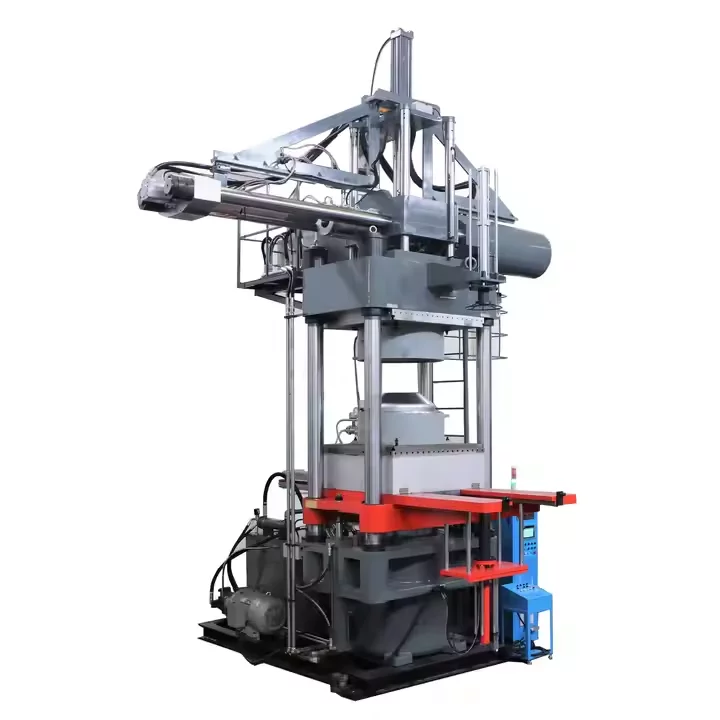
Tyre bladders are one example where compound selection and molding conditions must be evaluated together because the finished bladder must withstand repeated curing cycles, thermal exposure, and dimensional requirements.HWAYI‘s tyre bladder injection machine features stable injection control and precise mold clamping for demanding rubber products. The equipment is designed for tyre bladders used in curing processes and supports configurable production needs. Those capabilities provide a platform, while compound trials establish the settings required for a specific formulation and geometry.
Material efficiency influences total cost. Controlled shot size, balanced cavities, suitable venting, and reliable demolding can reduce flash and scrap. Regrind or recycled content must be evaluated carefully because changes in viscosity, contamination, or cure behavior may affect consistency and the performance obligations of the finished component.
Insert molding adds another layer of compatibility. Metal preparation, primer, compound adhesion, thermal expansion, and insert positioning can determine bond quality. Tooling and handling should prevent movement during injection while allowing the molded part to release without damaging the interface.
Color and surface requirements also affect formulation and processing. Pigments, fillers, release agents, and post-cure steps may change flow or appearance. Approval samples should be produced using the intended production recipe, since a visually similar development compound may not behave identically in a multi-cavity industrial tool.
Validate Performance Through Production Trials
Laboratory data narrows the material shortlist, but production trials reveal fill balance, cure behavior, surface quality, dimensions, and demolding. A custom rubber molding validation plan should define sample size, machine conditions, inspection methods, and acceptance criteria. Results need to cover both initial performance and relevant aging or endurance tests.
Tyre bladder production demonstrates the importance of repeatability. HWAYI highlights precision injection, stable clamping performance, optimized cycles, durable construction, and lower material waste. Passenger-car, truck, bus, and industrial tyre applications can impose different dimensions and duty expectations, so equipment configuration and material qualification should be aligned to the target product.
Approved compounds require change control after launch. Supplier changes, ingredient substitutions, color adjustments, storage conditions, and batch variation can influence molding. Incoming checks and retained samples help manufacturers investigate deviations without relying on memory or broad material labels.
Procurement and quality teams should also agree how alternates will be qualified. A second source may reduce supply risk, but its material should not enter production solely because its datasheet appears equivalent. Comparative trials and documented approval preserve both continuity and the validated molding window.
The best material is therefore the one that meets verified service requirements and runs reliably in the intended process. A prudent sourcing review compares candidate compounds through documented testing, tool trials, production capability, and lifecycle cost. That approach keeps material selection technical and application-specific rather than turning custom rubber injection molding into a choice based on familiarity alone.