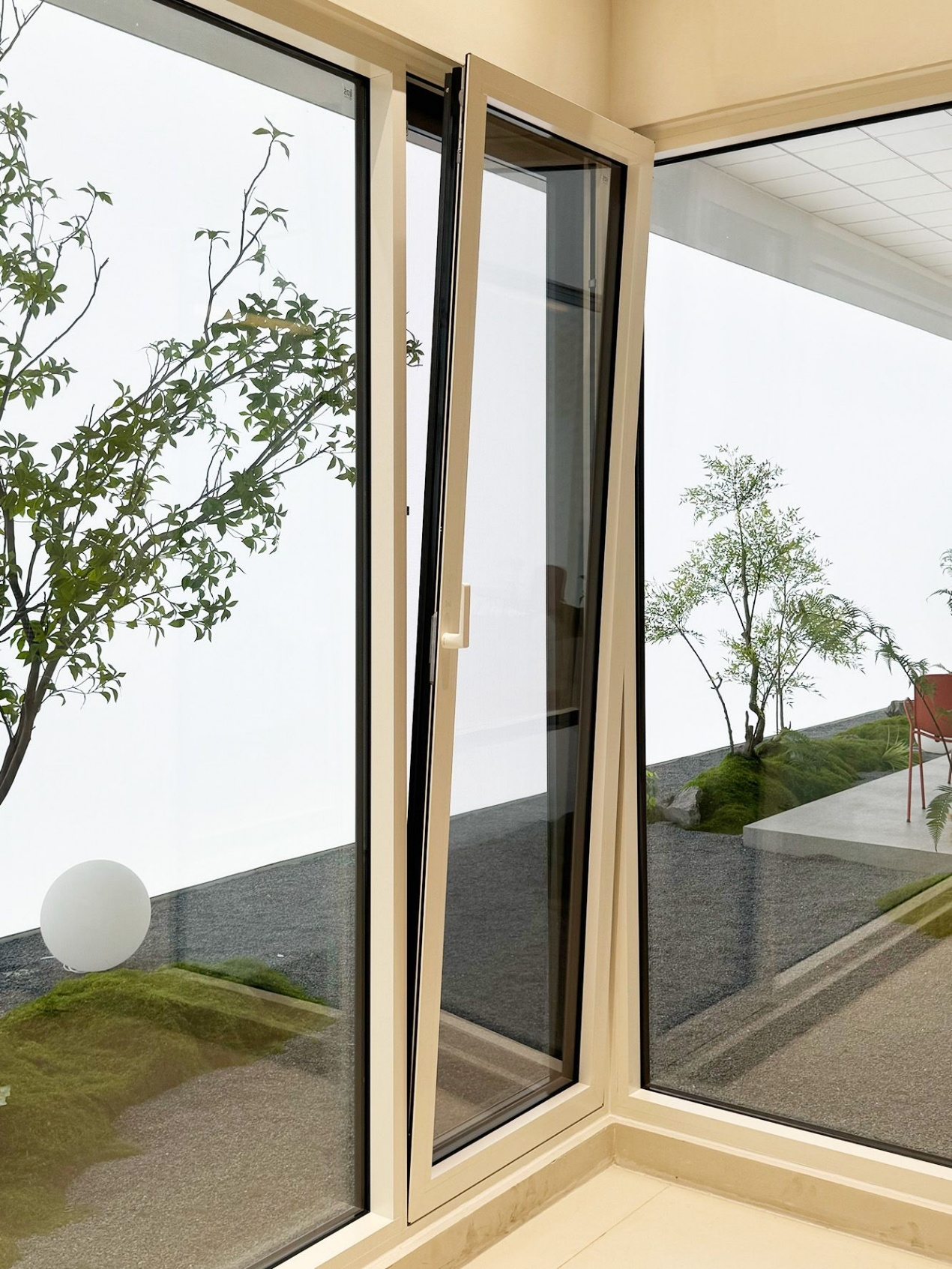
A clean architectural facade depends on more than window frames and glazing. The position of hinges, the shape of handles, and the way an opening sash meets its frame can all influence the finished appearance. Concealed hardware helps reduce visible mechanical details while preserving the opening functions required in everyday use. For architects, window fabricators, and project specifiers, understanding how these components work together is an important step toward creating flush tilt and turn windows with a consistent visual language. CMECH’s concealed hinge configuration provides one example of how hardware design can support this architectural approach.
Why Hardware Matters to a Minimalist Facade
Minimalist architecture often relies on alignment, repeated proportions, and uninterrupted visual lines. When visible hinge knuckles or prominent fittings interrupt the window profile, they can draw attention away from the glazing and surrounding materials. Concealed hardware places the hinge mechanism within the window structure, reducing the number of visible elements on the finished surface.
This approach is particularly relevant when multiple windows appear across the same elevation. A consistent hardware arrangement can help maintain a unified appearance between individual openings, although the final result also depends on frame geometry, installation details, and the relationship between the window and the wall.
For projects specifying flush tilt and turn windows, it is important to distinguish concealed hinges from a completely concealed window frame. Hidden hinges reduce the visibility of selected hardware components; they do not automatically make the entire sash or frame disappear. CMECH’s concealed configuration focuses on the hardware arrangement, pairing concealed hinges with minimalist handles to create a cleaner window appearance.
Two Opening Functions Within One Window
The defining feature of a tilt and turn window is its dual opening operation. Depending on the handle position and hardware arrangement, the sash can tilt inward for ventilation or swing inward for a wider opening. These functions provide different ways to use the same window, making the operating mechanism an important part of the specification.
The hardware must coordinate movement across the sash rather than simply connect the window to its frame. The handle operates the drive gearbox, which transfers movement through the relevant drive and locking components. Hinges support the sash and guide its movement, while the associated hardware helps maintain the intended closing position.
CMECH offers concealed hinge hardware with Milan Series or Venice Series handles. Its drive gearbox uses patented dual-gear technology, with a design intended to address gear play and backlash. An anti-drift feature helps maintain alignment, while a stainless steel faceplate is designed to resist wear and deformation.
These internal details matter because a minimalist exterior still relies on coordinated mechanical components. Concealment changes how the hardware appears, not the need for accurate movement and suitable component selection.
Matching Concealed Hinges to Sash Dimensions
A seamless appearance cannot compensate for a hardware configuration that does not match the actual window. Sash dimensions and weight influence hinge selection, so these details should be confirmed before the hardware package is specified.
CMECH’s concealed hinge configuration has a published applicable sash width of 490–1,200 mm and sash height of 600–2,800 mm, with a load-bearing capacity of up to 130 kg. The available hinge load ratings range from 80 kg to 130 kg. These figures define the stated range for this configuration; they should not be treated as universal limits for every tilt and turn window or profile system.
The hinges use reinforced 304 stainless steel support arms and adjustable sealing geometry. For project teams, the practical task is to match the selected hinge capacity to the completed sash, including its glazing and other fitted components. The window profile, fixing arrangement, and intended opening geometry also need to be compatible with the hardware.
CMECH’s published dimensions therefore offer a starting point for evaluating suitability, rather than a substitute for checking the requirements of a specific installation.
Bringing a Flush Appearance and Practical Operation Together
The visual goal of flush tilt and turn windows is not achieved through the hinges alone. Handle selection also affects the way the interior window surface reads, especially in spaces where the fittings remain visible at close range. A restrained handle design can complement concealed hinges and help maintain a coherent finish across a project.
The Milan Series and Venice Series handles available with CMECH’s concealed configuration provide options for different interior styles. Their design recognition includes the German Red Dot and iF Design Awards. These distinctions relate to the handles themselves; they should not be interpreted as certification of the complete window assembly or its overall building performance.
For specifiers considering flush tilt and turn windows, hardware coordination should begin early enough to account for both the intended appearance and the operating requirements. The selected handle, gearbox, hinges, and locking components need to work as a coordinated arrangement. CMECH’s concealed configuration brings these elements together in a hardware system intended to balance a streamlined appearance with functional operation.
What Project Teams Should Confirm Before Specification
Before finalizing a window schedule, architects and fabricators should confirm the sash width and height, estimated completed weight, and required opening functions. The selected hardware’s load-bearing rating must correspond to the actual sash rather than being chosen solely for its concealed appearance.
It is also useful to review the handle style, hinge adjustment provisions, and compatibility between the hardware and the proposed window profile. Installation planning deserves similar attention: concealed components depend on suitable space within the assembly, and the surrounding frame must accommodate their movement and fixing requirements.
CMECH’s concealed configuration can be evaluated against the project’s sash dimensions, weight, profile compatibility, and required opening functions.
Ultimately, flush tilt and turn windows require coordination between architectural intent and mechanical specification. Concealed hardware can reduce visual interruptions and support a more unified facade, but the result depends on selecting compatible components and integrating them correctly. By evaluating appearance, sash dimensions, weight, and operating requirements together, project teams can make more informed decisions about whether CMECH’s concealed configuration suits their design.