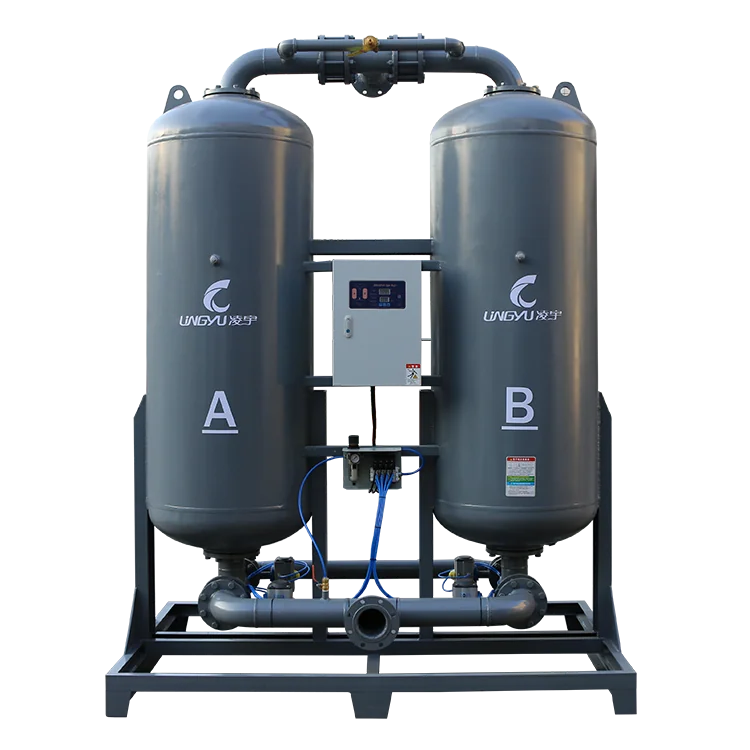
Compressed air is often referred to as the fourth utility, essential for a vast array of industrial processes. However, untreated compressed air contains moisture, oil, and particulates, all of which can severely impact product quality, lead to equipment downtime, and increase maintenance costs. While various air treatment methods exist, one of the most effective solutions for achieving very low dew points is the desiccant air dryer. Understanding when and why to deploy a desiccant air dryer is crucial for any operation serious about maintaining the integrity and efficiency of its compressed air system.
The Problem with Moisture in Compressed Air
Moisture in compressed air can manifest in several detrimental ways. Lingyu desiccant air dryer can consistently deliver dew points far below freezing, making them indispensable for critical applications. As compressed air cools, the water vapor condenses into liquid water. This liquid water can then corrode piping, pneumatic tools, and machinery, leading to premature wear and failure. In sensitive applications like painting, food processing, pharmaceuticals, and electronics manufacturing, even small amounts of moisture can contaminate products, leading to costly rejections. Furthermore, in environments with freezing temperatures, water can freeze within air lines and equipment, causing blockages and significant damage.
To combat these issues, an air dryer desiccant type system is often the ideal choice. Unlike refrigerated dryers that can only achieve dew points down to a couple of degrees Celsius.
How a Desiccant Air Dryer Works
A desiccant air dryer operates on the principle of adsorption. It typically consists of two towers filled with a desiccant material, such as activated alumina, silica gel, or molecular sieve. As compressed air saturated with moisture enters one tower, the desiccant material adsorbs the water vapor, allowing dry air to pass through. Once the desiccant in the first tower becomes saturated, the airflow is switched to the second tower, which has been regenerated and is ready to dry the incoming air.
During this drying cycle, the saturated desiccant in the first tower undergoes regeneration. This involves removing the adsorbed moisture from the desiccant material so it can be used again. There are several methods for regeneration, which define the different air dryer desiccant type categories:
Heatless Desiccant Dryers: These dryers use a small portion of the already-dried compressed air to purge the saturated desiccant tower. The dry purge air expands to atmospheric pressure, becoming extremely dry, and then flows counter-currently through the saturated desiccant bed, carrying away the adsorbed moisture.
Heated Desiccant Dryers (Blower Purge/Heated Purge): These systems use external heaters or heat generated by an internal blower to heat the purge air, making regeneration more efficient and reducing the amount of compressed air needed for purging. This type of desiccant air dryer is more energy-efficient for larger capacities.
Heat of Compression Dryers: These dryers utilize the heat generated during the air compression process for regeneration, making them highly energy-efficient as they require no external heating or purge air. They are specifically designed to work with oil-free air compressors.
Each air dryer desiccant type offers specific advantages depending on the required dew point, energy consumption goals, and initial investment. The key is to select the appropriate desiccant air dryer that aligns with the application’s unique demands.
When to Opt for a Desiccant Air Dryer
The decision to use a desiccant air dryer is primarily driven by the required compressed air purity, especially concerning moisture content. Here are key scenarios where a desiccant air dryer is not just beneficial but often essential:
1. Critical Processes Requiring Ultra-Low Dew Points: Applications such as instrumentation, process controls, medical air, pharmaceutical manufacturing, and semiconductor production often demand pressure dew points below 0°C (32°F), sometimes as low as -40°C (-40°F) or even -70°C (-100°F). Refrigerated dryers cannot achieve these levels, making a desiccant air dryer the only viable option.
2. Outdoor or Unheated Air Lines in Freezing Climates: When compressed air lines or equipment are exposed to ambient temperatures that can drop below freezing, any residual moisture will freeze, causing blockages and potential damage. A desiccant air dryer ensures that the air is dry enough to prevent freezing within the system.
3. Spray Painting and Coating Applications: Moisture in compressed air used for painting can lead to fish eyes, blistering, and poor adhesion. A desiccant air dryer ensures a flawless finish by eliminating humidity.
4. Pneumatic Tools Operating in Cold Environments: To prevent ice formation and ensure consistent performance and longevity of pneumatic tools, especially in unheated workshops or outdoor construction sites, a desiccant air dryer is critical.
5. Food and Beverage Processing: In contact with food products, compressed air must be free of contaminants, including moisture. A desiccant air dryer helps meet stringent hygiene standards and prevents product spoilage.
6. Transportation and Vehicle Braking Systems: For trains, buses, and heavy trucks, dry air is essential for the reliable operation of air brakes and suspension systems, especially in cold weather.
Lingyu Desiccant Air Dryers: A Reliable Solution
Lingyu offers a comprehensive range of high-performance Lingyu desiccant air dryer systems designed to meet the rigorous demands of various industrial applications. As detailed on their product pages (e.g., this Lingyu desiccant air dryer), Lingyu provides diverse models, including heatless, heated purge, and heat of compression types, catering to different operational scales and purity requirements. The Lingyu desiccant air dryer range is engineered for efficiency, reliability, and longevity, incorporating advanced desiccant materials and intelligent control systems.
Each Lingyu desiccant air dryer is designed with features that contribute to optimal performance and ease of maintenance. This includes robust construction, high-quality desiccant media for extended life, and energy-saving controls that minimize purge air consumption. Their offerings are specifically aimed at providing highly dry compressed air, featuring pressure dew points as low as -40°C (-40°F) and below, which is critical for protecting sensitive equipment and processes. Lingyu emphasizes the importance of selecting the correct air dryer desiccant type to maximize efficiency and achieve the desired air quality without unnecessary operational costs. By leveraging Lingyu’s expertise and the quality of a Lingyu desiccant air dryer, industries can safeguard their investments and ensure uninterrupted, high-quality production.
Conclusion
The selection of an appropriate compressed air dryer desiccant type is a strategic decision that directly impacts operational efficiency, product quality, and equipment lifespan. While refrigerated dryers are suitable for many applications, the unmatched ability of a desiccant air dryer to achieve extremely low dew points makes it indispensable for critical processes and cold environments. By understanding the underlying technology and carefully considering the specific needs of an application, industries can effectively deploy a desiccant air dryer — such as the reliable systems offered by Lingyu — to ensure their compressed air is always of the highest possible quality, free from the damaging effects of moisture.