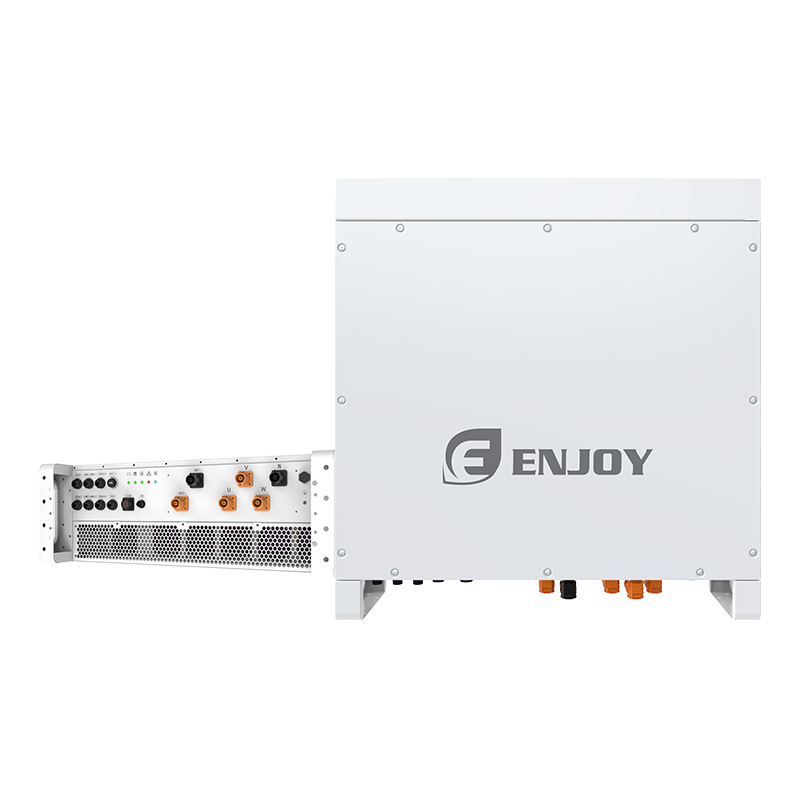
Industrial power systems often contain both harmonic-producing and reactive loads, which can make power factor discussions confusing. A common misconception is that installing a harmonic filter automatically corrects power factor. For plant engineers, EPC contractors, and electrical-system integrators, understanding the distinction is important when specifying power quality products for the power generation industry. Harmonic filtering and reactive power compensation can work together, but they address different electrical problems.
What Does a Harmonic Filter Actually Correct?
A harmonic filter primarily addresses harmonic distortion rather than fundamental-frequency reactive power. Nonlinear equipment such as rectifiers, variable-frequency drives, and power electronic converters can draw current in distorted waveforms. These harmonic currents can increase losses, heating, and electrical stress within a distribution system.
An Active Harmonic Filter (AHF) monitors the electrical waveform and generates compensating currents to reduce unwanted harmonic components. The result can be cleaner current and lower total harmonic distortion. However, that does not automatically mean the fundamental reactive power requirement has been eliminated.
This distinction matters because a facility can have relatively low harmonic distortion while still experiencing poor power factor due to inductive loads. Conversely, harmonic distortion can be significant even when displacement power factor is relatively good.
Why Harmonic Distortion and Power Factor Are Different
Power factor describes how effectively electrical power is converted into useful work. In a simplified system, displacement power factor is associated with the phase relationship between voltage and fundamental current. Harmonic distortion introduces another component into the overall power-factor calculation.
Consequently, simply installing a harmonic filter should not be treated as equivalent to installing dedicated reactive power compensation. Engineers should measure harmonic current, reactive power, displacement power factor, and total power factor separately when diagnosing a facility.
This is why a complete power-quality assessment should precede equipment selection. The measurements reveal whether the primary requirement is harmonic mitigation, reactive compensation, load balancing, or a combination of these functions.
When SVG SVC Compensation Becomes Relevant
Static Var Generators (SVGs) are designed to provide dynamic reactive power compensation. They can respond to changing reactive demand and help maintain a desired power factor. Static Var Compensators (SVCs), meanwhile, use power-electronic and passive components to control reactive power and voltage characteristics.
For facilities with both nonlinear and reactive loads, SVG SVC compensation may therefore be considered alongside active harmonic filtering. The technologies should not be viewed as interchangeable simply because both are categorized as power-quality equipment.
Enjoypowers’ current portfolio illustrates this distinction through its AHF and SVG product configurations. The company describes its power-quality products as providing harmonic filtering and power-factor correction, while its industrial solution specifications list a target power factor of 0.99.
Can an Active Filter Also Provide Reactive Compensation?
Some modern active filters can perform multiple compensation functions. This is where product architecture becomes important. An AHF may be configured to address harmonic currents, while a combined AHF/SVG platform can additionally compensate reactive power and three-phase unbalance.
Enjoypowers’ SinL Pro Series is an example of this integrated approach. The manufacturer specifies that the platform can operate in harmonic, reactive, unbalance, and neutral-line compensation modes. When configured as an SVG, the platform supports reactive, harmonic, and three-phase-unbalance compensation, with an adjustable compensation priority.
For system designers, this means the relevant question is not simply whether a product is called a “harmonic filter.” The more useful question is which compensation functions are actually included in the selected configuration.
What the SinL Pro Platform Offers
Enjoypowers positions its SinL Pro Series as a SiC-based active power-quality platform intended for applications where fast response and high power density are important. Its published specification gives a response time of no more than 5 ms and a harmonic compensation range covering the 2nd through 50th orders.
The product page also specifies harmonic reduction above 95% at rated load and THDi of no more than 5% after filtering. The platform supports three-phase three-wire and three-phase four-wire systems and operates across 50/60 Hz systems.
For procurement teams, these specifications provide a more useful basis for technical evaluation than a general claim that a filter “improves power quality.”
Why SiC Can Matter for Power Quality Applications
The semiconductor platform can influence the characteristics of an active compensation system. Enjoypowers describes the SinL Pro as using silicon carbide (SiC) technology, with a 5 ms response and a three-level topology. The published product information also identifies 30–200 A AHF modules and 20–150 kVar SVG modules, with up to 12 modules integrated into one cabinet.
The company states that its SiC platform is designed to provide higher power density and lower switching losses compared with its IGBT-based SinE platform. These characteristics can be relevant where switchroom space, thermal management, and fast-changing loads are important considerations.
However, semiconductor selection should remain part of a broader system evaluation rather than being treated as the sole indicator of suitability.
Applying Power Quality Products to Power Generation
Power generation facilities and associated electrical infrastructure can contain diverse loads, including auxiliary motors, pumps, fans, excitation systems, converters, and other power-electronic equipment. Their electrical characteristics vary substantially by plant design.
For this reason, power quality products for the power generation industry should be selected according to measured site conditions. Engineers may need to evaluate harmonic spectrum, reactive demand, voltage variation, load balance, short-circuit conditions, and the point of common coupling before defining the required compensation architecture.
An integrated AHF and SVG solution can be useful where both harmonic and reactive-power problems exist. Enjoypowers also identifies power-quality applications across industrial facilities, data centers, steel mills, chemical plants, paper mills, and automotive facilities.
The Right Way to Evaluate Power Factor Correction
The misconception becomes easier to resolve when the electrical problems are separated. A harmonic filter reduces harmonic currents; reactive compensation addresses reactive power; and an integrated system can perform both functions when specifically designed for them.
For business buyers, the evaluation should therefore begin with measurements rather than product names. Enjoypowers‘ SinL Pro platform demonstrates how modern AHF/SVG equipment can combine harmonic mitigation and reactive compensation within one modular architecture. Its published specifications, including ≤5 ms response, 2nd–50th harmonic compensation, and THDi ≤5%, provide concrete parameters for technical due diligence.
A harmonic filter does not inherently equal power-factor correction. When a facility requires both functions, dedicated or integrated reactive compensation such as SVG or SVC technology may be necessary. Understanding that distinction allows engineers to develop a more accurately sized power-quality system and helps industrial buyers select equipment according to the actual electrical behavior of the installation.