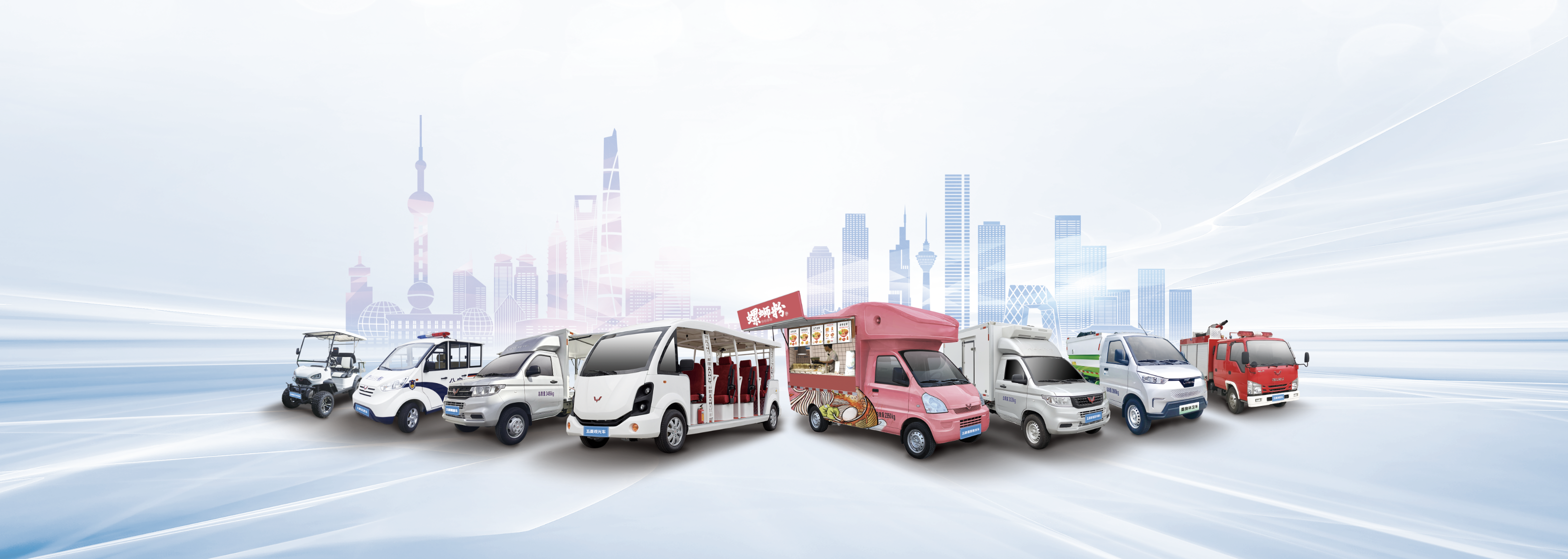
Commercial utility vehicles are undergoing a major technological transition. Fleet operators increasingly need vehicles that combine dependable performance with lower operating costs, emissions compliance, and greater energy efficiency. This shift is placing the automotive powertrain at the center of commercial vehicle development. Rather than relying on one technology, the next generation of commercial platforms is likely to combine improved internal combustion engines, hybrid systems, battery-electric drivetrains, and increasingly sophisticated electronic controls.
For companies involved in logistics, passenger transport, municipal services, and specialized commercial applications, understanding these technologies is important for long-term fleet planning. The right powertrain must match the vehicle’s operating environment, payload, route profile, energy infrastructure, and total cost of ownership.
Why Powertrain Technology Matters for Commercial Vehicles
Commercial vehicles typically operate more intensively than private passenger cars. They may accumulate high annual mileage, carry substantial loads, and follow demanding stop-and-go routes. Consequently, even relatively small improvements in energy efficiency can have a meaningful effect on operating expenditure over the vehicle’s service life.
The International Energy Agency reports that commercial vehicle operators are particularly sensitive to total cost of ownership because capital, energy, and labor costs directly affect business profitability. Its latest analysis also shows rapid growth in electric truck adoption, with global electric truck sales more than doubling in 2025.
This makes automotive manufacturing increasingly focused on powertrain efficiency, durability, integration, and adaptability rather than simply engine output.
Advanced Internal Combustion Remains Part of the Transition
Electrification is accelerating, but internal combustion technology still has an important role in many commercial applications. Vehicles operating in regions with limited charging infrastructure or demanding long-distance duty cycles may continue to require combustion-based solutions.
Next-generation development therefore focuses on improving combustion efficiency, reducing emissions, optimizing engine control, and integrating engines with increasingly intelligent vehicle systems. Wuling Motors’ powertrain portfolio demonstrates this multi-technology approach, covering gasoline engines alongside new-energy solutions. Its engine manufacturing heritage spans nearly 60 years and includes engines ranging from 0.6L to 3.7L.
For fleet buyers, continued improvement of conventional powertrains can provide an important bridge while charging infrastructure and vehicle electrification continue to develop.
Hybrid Powertrains Balance Flexibility and Efficiency
Hybrid technology provides another pathway for commercial utility vehicles. By combining an internal combustion engine with electric drive components, hybrid architectures can reduce fuel consumption while retaining the flexibility associated with liquid-fuel refueling.
This can be valuable for fleets that operate across mixed environments. A vehicle may spend part of its working day in urban areas and later travel longer distances where charging availability is less predictable. Hybrid systems can provide a compromise between conventional and fully electric operation.
Wuling’s powertrain portfolio includes motor and electric-control products for EV, HEV, and PHEV systems, as well as a PDS drive hybrid system. The company also identifies an extended-range engine platform developed specifically for extended-range electric vehicles.
Battery-Electric Drivetrains Are Reshaping Commercial Mobility
Battery-electric powertrains are becoming increasingly important for commercial fleets, particularly where vehicles operate predictable routes and can access suitable charging infrastructure. Electric drivetrains offer fewer mechanical components than conventional powertrains and can provide highly efficient energy conversion.
The IEA reports that electric trucks represented 9% of global truck sales in 2025, while one in four trucks sold in China was electric. It also notes that battery-electric trucks can already achieve competitive total cost of ownership in some Chinese applications.
This development is encouraging commercial vehicle manufacturers to strengthen their electric-drive capabilities. Wuling Motors, for example, lists driving motors, motor controllers, electric rear axles, and other new-energy powertrain technologies within its broader business activities. Its 2023 annual report also describes the development of electric drive axles, range extenders, and hybrid power systems.
Electronic Controls Are Becoming a Core Powertrain Technology
The next generation of commercial powertrains will not depend only on batteries, motors, or engines. Electronic control systems increasingly determine how these components interact. Electronic control systems can coordinate torque delivery, energy recovery, battery operation, and engine performance to support overall vehicle efficiency.
This is particularly important for hybrid and electric vehicles because multiple systems must operate together under changing loads and road conditions. Advanced testing is therefore essential during development.
Wuling Motors reports that its new-energy vehicle powertrain laboratory includes hybrid powertrain test benches, a complete-vehicle drum emission test bench, and other R&D and verification equipment. Its listed production capabilities also include new-energy motor assembly.
Automotive Manufacturing Is Moving Toward Flexible Platforms
Commercial customers rarely have identical requirements. A delivery vehicle, municipal service vehicle, passenger shuttle, and specialized utility vehicle may require completely different combinations of power, range, payload, and energy management.
That is why flexible automotive manufacturing is becoming increasingly valuable. Modular powertrain architectures can allow manufacturers to support multiple vehicle applications while adapting the propulsion system to different market requirements.
Wuling’s combination of traditional engine manufacturing and new-energy powertrain development illustrates this broader industry direction. Its current powertrain offering spans internal combustion engines, hybrid systems, plug-in hybrid systems, range extenders, driving motors, and electric-control technologies.
Choosing the Right Powertrain for the Next Fleet Cycle
The future of commercial utility vehicles will not be defined by a single propulsion technology. Internal combustion engines, hybrids, range-extender systems, and battery-electric drivetrains each have roles depending on operating conditions and infrastructure.
For fleet operators, the priority should therefore be matching the automotive powertrain with real-world requirements rather than selecting technology based solely on market trends. Factors such as route distance, payload, charging access, utilization, maintenance, and total cost of ownership should guide procurement decisions.
Wuling Motors‘ combination of conventional engine expertise and new-energy development provides an example of how manufacturers are adapting to this changing landscape. As commercial mobility becomes increasingly electrified and digitally controlled, manufacturers capable of developing multiple powertrain solutions will be better positioned to support diverse commercial applications.