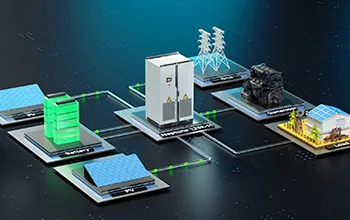
High-voltage storage projects involve more than placing batteries and connecting cables. Before a system begins normal operation, electrical connections, protection settings, communication links, control parameters, and safety functions all need to be checked against the project design.
A well-organized energy storage system installation process creates a clear path from physical construction to controlled commissioning. YUNT supports energy storage projects across planning, integration, commissioning, and long-term technical service, giving project teams a broader framework for managing these stages.
Reviewing Site Conditions Before Energization
Commissioning starts with the physical environment. The installation area should be checked against approved drawings, equipment clearances, ventilation requirements, cable routes, grounding arrangements, and emergency access provisions. Any difference between the actual site and the design documentation should be resolved before energization.
Electrical inspection deserves particular attention in high-voltage applications. Cable terminations, conductor identification, torque values, insulation condition, and grounding continuity should be verified systematically. Protective devices should also correspond with the approved electrical design rather than relying on assumptions made during construction.
Documentation forms another part of the pre-commissioning review. Equipment records, wiring diagrams, test results, installation drawings, and configuration files should be available to the commissioning team. Clear documentation makes later troubleshooting considerably easier because measured conditions can be compared with the intended system configuration.
Checking Battery and Power Conversion Interfaces
The relationship between battery equipment and power conversion equipment requires careful verification. Voltage ranges, current limits, communication channels, protection signals, and control commands should correspond across connected devices. A mismatch in one parameter can affect charging, discharging, or fault response.
The energy storage system installation should also include checks on polarity and phase relationships. Incorrect polarity can create serious electrical hazards, while phase sequence errors may affect AC-side equipment. Measurement instruments should be suitable for the voltage levels involved and used according to established safety procedures.
Communication testing comes next. Battery management systems, power conversion equipment, meters, and supervisory controllers may exchange status information continuously. Each communication path should be tested for correct addressing, signal interpretation, alarm transmission, and command response before automatic operation is enabled.
Validating Protection and Control Functions
Protection settings should be reviewed against the approved coordination study. Overvoltage, undervoltage, overcurrent, insulation faults, temperature alarms, and other protective functions need defined thresholds and response actions. Settings that appear reasonable in isolation may still conflict with upstream or downstream equipment.
Functional tests can then verify whether the system responds as intended. A controlled test may simulate selected abnormal conditions and confirm that alarms appear, power flow changes, or equipment enters the appropriate protective state. Such testing should follow the project’s approved commissioning procedures and safety controls.
Control logic also needs practical verification. Operating modes, charging limits, discharge limits, state-of-charge thresholds, and grid interaction settings can influence how the system behaves under different conditions. Energy storage maintenance becomes easier later when these initial parameters are documented clearly and changes are recorded.
Conducting Controlled Energization Tests
Energization should follow a defined sequence rather than treating the first power-up as a single event. Individual sections can be checked before broader system operation begins, allowing abnormal readings to be identified without exposing the entire installation to unnecessary risk.
Measurements during initial operation can provide useful baseline data. Voltage, current, frequency, temperature, communication status, and other relevant values should be recorded under controlled conditions. These records become useful references when the system is inspected after several months of operation.
Performance verification should also reflect the intended application. A system designed for peak management may require controlled charge and discharge tests, while a project serving backup or microgrid functions may need additional operating-mode checks. The commissioning checklist should reflect actual project objectives rather than relying on a generic template.
Preparing for Long-Term Operation
A successful commissioning process does not end once the system reaches normal operating status. Operators need practical instructions covering startup, shutdown, alarm handling, emergency procedures, and routine inspection. Training should focus on actions that site personnel are actually expected to perform.
The handover package should contain final settings, test records, as-built drawings, equipment documentation, and communication information. These materials provide a technical reference for future service teams and reduce uncertainty when system parameters need to be reviewed.
Routine energy storage maintenance should be planned around the equipment configuration and operating environment. Inspection intervals can cover electrical connections, cooling systems, communication status, alarms, and other relevant components. Remote technical support can supplement on-site work when diagnostic information is available through the system’s monitoring architecture.
Turning Commissioning Data Into a Long-Term Reference
Commissioning is most valuable when it establishes a reliable technical baseline rather than simply marking the end of construction. A disciplined energy storage system installation process verifies physical connections, electrical characteristics, communication, protection, and operating logic before normal service begins.
Subsequent energy storage maintenance can then be measured against documented commissioning conditions, making changes easier to identify and investigate. YUNT‘s full-lifecycle service model covers planning consultation, load and application analysis, installation documentation, wiring guidance, remote commissioning, parameter verification, troubleshooting, O&M guidance, and spare-parts support. That continuity gives project teams a practical reference point from initial energization through long-term system operation.