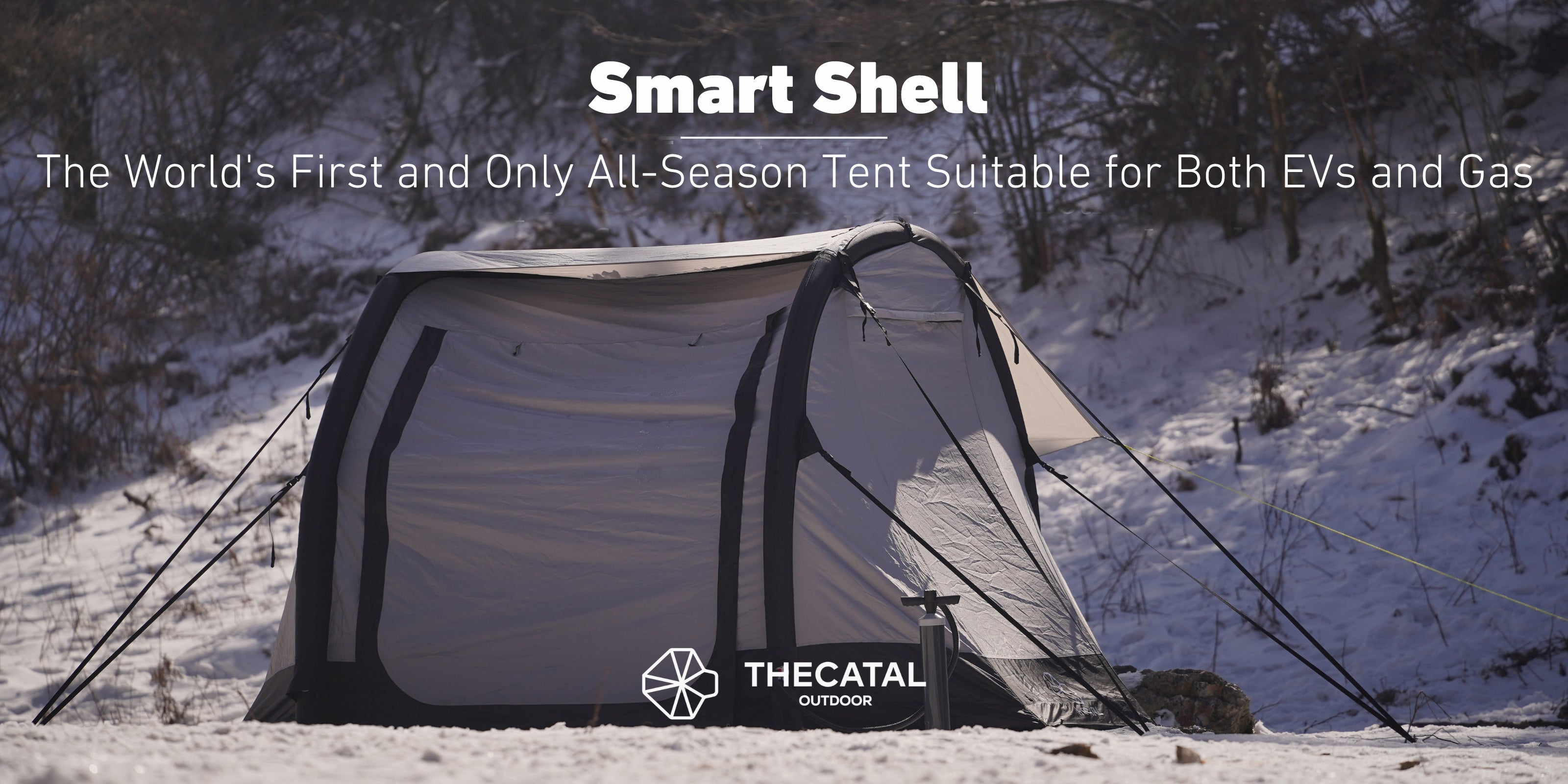
Connecting a tent to a vehicle’s climate control system is still a fairly new idea for most campers, so many buyers approach it with assumptions borrowed from ordinary tents or window-mounted AC units. Those assumptions do not always hold up. A shelter built around a vehicle’s air conditioning depends on a physical connection, a compatible setup, and weather-rated materials working together, and several avoidable mistakes tend to cluster around those three points.
Mistake: Connecting Near the Exhaust Instead of Around It
One of the more basic errors with any vehicle-attached tent is assuming the connection point can go wherever is convenient at the rear of the car. On a gasoline vehicle, placing a sealed enclosure too close to the tailpipe risks trapping exhaust near the tent’s air intake area, which is a real safety concern rather than a minor inconvenience.
THECATAL’s Smart Shell, a car extended tent, is built so that its connection to the vehicle avoids the tailpipe. Even with that design, the attachment point should be checked against the vehicle’s exhaust location before installation, and the car should be parked with open air around the tailpipe. Exhaust clearance is not something to infer from a generic camping accessory.
Mistake: Assuming One Connection Method Fits Every Vehicle
“AC-compatible” can sound like a single universal fitting, but the connection still has to match a specific vehicle’s tailgate or rear opening. Electric and gasoline vehicles do not share identical rear-body geometry, and a loose connection leaks cooled air, which defeats much of the purpose of linking the tent to the car’s climate system.
The Smart Shell connects to the air conditioning of both electric and gasoline-powered vehicles and is designed to fit a wide range of vehicles, including SUVs, compacts, and vans. Rear openings still differ from one model to another, so measuring the tailgate area and confirming fit before purchase helps avoid gaps around the attachment point.
Mistake: Locking Into One Configuration Too Early
Many buyers assume an AC-connected tent is only useful as a rear-attached shelter, then find themselves stuck when the vehicle needs to move mid-trip or when another layout would suit the group better.
The Smart Shell can be set up as a rear tent for sleeping, a shaded side tent for cooking and relaxing, or a standalone camping tent at the campsite. The standalone setup frees the vehicle for drives during an extended stay. Committing to a single layout without reviewing the others can mean missing a more practical arrangement for a given site or group size.
Mistake: Underestimating the Footprint Before Arriving
Vehicle-attached shelters, such as those developed by THECATAL, take up more combined space than the tent alone, because the parked vehicle becomes part of the footprint, and campsite dimensions rarely account for that.
The Smart Shell’s interior measures 3.5 m × 2.5 m (11.5 ft × 8.2 ft). Since it attaches to a parked vehicle, setup needs room for both the tent and the car, plus fairly level ground. That makes site selection more demanding than pitching a conventional ground tent with a similar interior area.
Campers who reserve a standard tent-sized site without factoring in the vehicle’s length sometimes end up negotiating space at check-in. Comparing the tent’s dimensions and the car’s parked length with the site size before the trip avoids that.
Mistake: Rushing Setup Based on the Quoted Time
Quick setup is a common selling point across outdoor gear, and it can create unrealistic expectations for a first attempt. The Smart Shell goes up in about 3 minutes with no complex assembly, which suits quick stops and road trips.
A first pitch usually takes longer, since site conditions, wind, and familiarity with the tent all affect the time. Practicing once at home or in a parking lot before the first night out is more useful than treating the figure as a fixed promise. The same applies to most new tent designs, not only AC-connected ones, but it is worth planning around before the trip rather than during it.
Mistake: Assuming Climate Control Replaces Weather-Rated Materials
Because the appeal of an AC-connected tent centers on temperature control, some buyers assume the fabric and weatherproofing matter less than they would for a standard tent. Wind, rain, and snow still act on the shelter regardless of what is happening inside it.
The Smart Shell is made from silicone-coated ripstop 70D nylon and is waterproof, windproof, snow-proof, and heat-resistant, at a weight of 26 lb (12 kg). Those properties matter as much as the air conditioning connection for a shelter meant for year-round camping.
Luxury tents with air conditioning still depend on baseline materials holding up to outdoor exposure. Climate control adjusts interior comfort, but it does not stand in for fabric and structure rated for the conditions outside the tent walls. The Smart Shell comes with a two-year warranty for additional coverage during regular use.